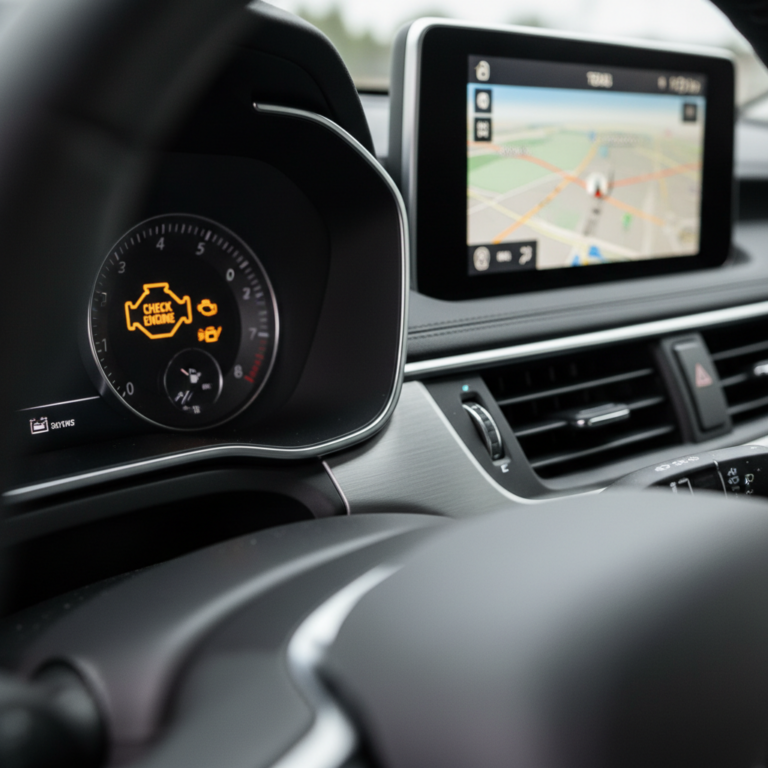
Few things make a driver’s stomach drop faster than seeing that little amber light pop up on the dashboard. If you’re wondering what does the check engine light mean, you’re not alone. Nearly 20% of drivers are currently driving around with theirs illuminated right now.
Here’s the truth: that light isn’t your car being dramatic. It’s your vehicle’s way of saying something needs attention. The good news? Most causes aren’t catastrophic. The bad news? Ignoring it can turn a $200 repair into a $1,300 nightmare.
After 15 years helping Texas drivers understand their vehicles, I’ve seen every check engine light scenario you can imagine. Let me walk you through exactly what that warning means, the most common causes I see here in Texas, and what you should do next.
Understanding the Check Engine Light: What It’s Telling You
Before we dive into causes and fixes, let’s understand what’s actually happening under your hood when that light appears.
What Is the Check Engine Light (Malfunction Indicator Lamp)?
The check engine light, officially called the Malfunction Indicator Lamp (MIL), is part of your vehicle’s onboard diagnostics system. Since 1994, the EPA has required all vehicles sold in the US to have this monitoring system installed.
Think of it as your car’s way of flagging a problem it detected. When something goes wrong with your engine, emissions system, or related components, your vehicle stores a diagnostic trouble code (DTC) and turns on the light to get your attention.
How the OBD-II System Monitors Your Vehicle
Your car’s OBD-II (On-Board Diagnostics, Version 2) system constantly monitors dozens of sensors throughout your vehicle. It checks everything from fuel mixture to catalytic converter efficiency to exhaust emissions.
When a sensor detects a reading outside normal parameters, the system logs a code. You can learn more about this system in the California Air Resources Board OBD-II fact sheet, which explains the technical requirements in detail.
Solid vs Flashing Check Engine Light: Critical Differences
Important: Not all check engine lights are equal. The behavior of the light tells you how urgent the problem is:
- Solid light: Something needs attention, but it’s not an emergency. Schedule service soon.
- Flashing light: This indicates a severe problem, usually an engine misfire. Pull over safely and turn off your engine immediately.
A flashing check engine light typically means unburned fuel is entering your exhaust system. This can destroy your catalytic converter within minutes. Don’t risk it.
The 7 Most Common Check Engine Light Causes in Texas
Living in Texas adds some unique challenges to vehicle ownership. Our extreme heat accelerates certain failures, particularly with components exposed to high temperatures. Here are the seven most common causes I see:
1. Loose or Damaged Gas Cap (Easiest Fix)
Before you panic, check your gas cap. This is the simplest cause and costs nothing to fix. A loose, cracked, or missing gas cap allows fuel vapors to escape, triggering your vehicle’s evaporative emissions system sensors.
What to do: Tighten your gas cap until it clicks. If the cap is damaged, replace it for $10-$20. The light should reset within a few drive cycles.
2. Faulty Oxygen Sensor (Most Common in Hot Climates)
Oxygen sensors measure how much unburned oxygen is in your exhaust. This data helps your engine computer adjust the fuel mixture for optimal efficiency. Texas heat puts extra stress on these sensors, making them fail faster than in cooler climates.
Symptoms: Decreased fuel economy, rough idle, failed emissions test
Typical cost: $200-$500 including parts and labor
If you’re interested in protecting your vehicle from Texas heat, there are preventive measures that can extend the life of heat-sensitive components like O2 sensors.
3. Failing Catalytic Converter (Most Expensive Repair)
The catalytic converter reduces harmful emissions by converting toxic gases into less harmful substances. When it fails, you’re looking at the most expensive common check engine light repair.
Average cost: $1,313 nationally
Symptoms: Rotten egg smell, reduced power, failed emissions
Catalytic converters often fail because of other ignored problems. A faulty oxygen sensor or engine misfire can overheat your converter and destroy it. That’s why addressing check engine lights promptly saves money long-term.
4. Worn Spark Plugs and Ignition Coils
Spark plugs and ignition coils work together to ignite the fuel-air mixture in your engine. When they wear out, you’ll experience misfires that trigger the check engine light.
Symptoms: Engine misfires, rough acceleration, poor fuel economy
Typical cost: $100-$400 depending on engine configuration
5. Mass Airflow Sensor (MAF) Failure
The mass airflow sensor measures the amount of air entering your engine. This information helps determine how much fuel to inject. Texas dust and debris can contaminate these sensors over time.
Symptoms: Stalling, hesitation during acceleration, rough idle
Typical cost: $200-$400
6. Vacuum Leaks and EVAP System Issues
Your engine relies on a complex network of vacuum hoses and the EVAP (evaporative emissions) system. Texas heat causes rubber hoses to crack and deteriorate faster, leading to leaks.
Symptoms: High idle, hissing sound from engine, rough running
Typical cost: $100-$300 depending on leak location
7. Battery and Electrical System Problems
A weak battery or failing alternator can cause voltage fluctuations that confuse your vehicle’s sensors. This is especially common in Texas summers, when batteries work overtime to power your air conditioning.
If you’re curious about car battery life in Texas heat, you’ll find that our climate significantly shortens battery lifespan compared to cooler states.
Symptoms: Slow engine crank, dimming lights, multiple warning lights
Typical cost: $100-$300 for battery replacement
What to Do When Your Check Engine Light Comes On
Your check engine light just turned on. Here’s exactly how to respond.
Immediate Steps: Is It Safe to Drive?
- Check if the light is solid or flashing. Flashing means stop driving immediately.
- Assess your vehicle’s performance. Any strange sounds, smells, or vibrations?
- Check your gas cap. Make sure it’s tight and undamaged.
- Check your gauges. Is the temperature normal? Oil pressure okay?
If the light is solid and your car seems to be running normally, you can safely drive to a shop or home. Just schedule service within a few days.
How to Read Diagnostic Codes Yourself
You don’t need a mechanic to find out what code triggered your light. Most auto parts stores like AutoZone and O’Reilly offer free code readings. You can also purchase a basic OBD-II scanner for $20-$50 and read codes yourself.
AutoZone has an excellent guide on how to read OBD-II diagnostic codes that walks you through the process step by step.
When to Pull Over vs When to Schedule Service
Pull over immediately if:
- Check engine light is flashing
- Engine is overheating
- You smell burning or hear unusual sounds
- Vehicle is losing power or running rough
For a solid light with normal driving behavior, schedule service within a week. Over 9 million drivers have ignored their check engine light for three months or more. Don’t be one of them.
Free vs Paid Diagnostic Options in Texas
Here are your diagnostic options ranked by cost:
- Free: AutoZone, O’Reilly, and some independent shops offer free code reads
- Budget ($50-$100): Quick diagnostics at independent shops
- Full diagnosis ($100-$200): Complete inspection at dealerships or specialists
For a detailed estimate based on your vehicle and location, try RepairPal’s diagnostic cost estimator.
Check Engine Light Repair Costs: What to Expect
Let’s talk money. According to recent data on average check engine light repair costs, the national average in 2024 is $415.31, down about 3% from the previous year.
Average Repair Costs by Region
Texas falls into the West region, which has the highest average repair costs at $415.74. Labor rates and parts availability both factor into regional pricing differences.
Most Common Repairs and Their Price Ranges
| Repair | Average Cost |
|---|---|
| Gas cap replacement | $10-$25 |
| Spark plug replacement | $100-$400 |
| Oxygen sensor | $200-$500 |
| MAF sensor | $200-$400 |
| Catalytic converter | $1,000-$1,500+ |
When Repair Costs Don’t Make Sense
Sometimes the repair cost exceeds what makes financial sense. If you’re facing a $1,500 catalytic converter replacement on a car worth $3,000, you have a decision to make.
In these situations, it might be worth exploring quality used vehicles under $20,000 as an alternative. And when you’re ready to make that purchase, knowing how to approach negotiating the best price at Texas dealerships can save you thousands.
Preventing Check Engine Light Issues
An ounce of prevention beats a pound of repair bills. Here’s how to keep that light off longer.
Regular Maintenance Schedule
Following your manufacturer’s maintenance schedule prevents most check engine light triggers:
- Oil changes: Every 5,000-7,500 miles (or as specified)
- Air filter: Every 15,000-30,000 miles
- Spark plugs: Every 30,000-100,000 miles depending on type
- Fuel system cleaning: Every 30,000 miles
Texas-Specific Prevention Tips
Our Texas heat creates unique maintenance needs. Park in shade when possible. Use a windshield sunshade. Consider a lighter-weight oil in summer months if your manufacturer allows it. These small steps reduce heat stress on sensors and emissions components.
Using Vehicle History Reports to Spot Warning Signs
If you’re shopping for a used vehicle, check engine light history matters. A car with recurring CEL issues documented in its vehicle history report could be hiding chronic problems.
Make sure you properly test drive a used vehicle while watching for warning lights. Any hesitation to let you test drive with the engine fully warmed up should raise red flags.
Take Action Before a Small Problem Becomes Expensive
Now you understand what that check engine light means. Whether it’s a loose gas cap or a failing catalytic converter, knowledge is power. Get that code read, understand what you’re dealing with, and make an informed decision about repairs.
Remember: a flashing light means stop now. A solid light means schedule service soon. Either way, don’t join the millions of drivers who ignore warnings until they’re stranded on I-35 in August.
Your vehicle is talking to you. The check engine light is just one part of the conversation. Listen to it.