Understanding the Basics: What’s a Certified Pre-Owned Vehicle?
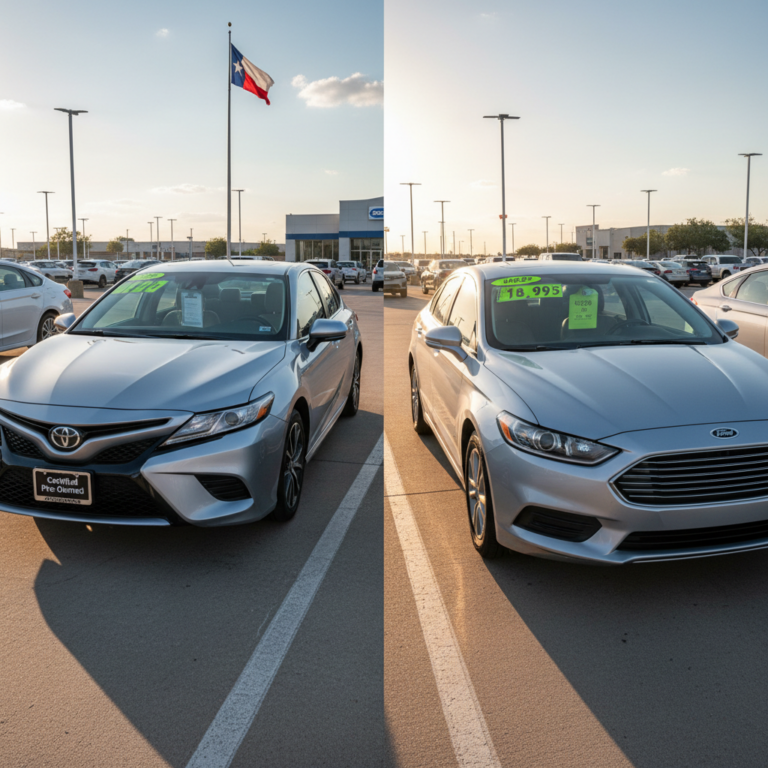
If you’ve stepped onto a Texas dealership lot lately, you’ve probably noticed two types of “used” cars with very different price tags. One says “Certified Pre-Owned” with a shiny badge, while the other just says “used.” So what gives?
The difference matters more than most buyers realize. And I’ve watched plenty of folks make expensive mistakes by not understanding it. Let me break this down the way I wish someone had explained it to me twenty years ago.
CPO Definition and Requirements
A Certified Pre-Owned vehicle isn’t just marketing speak. It’s a specific designation that means the car passed a manufacturer’s rigorous inspection program. We’re talking about the Toyota Certified Used Vehicles program doing 160-point inspections. Acura runs through 182 points. GM checks 172 items.
But that’s just the start. To qualify for CPO status, a vehicle typically needs to be:
- 6-10 years old or newer (varies by manufacturer)
- Under 80,000-100,000 miles depending on the brand
- Free of major damage with a clean title
- All safety recalls completed before certification
Most CPO vehicles started life as lease returns. Someone drove it for three years, turned it in, and the dealer certified it. That’s actually good news for you. Lease vehicles are generally well-maintained because lessees know they’ll pay for excessive wear.
How Regular Used Cars Differ
A regular used car? It could be anything. Five years old with 40,000 miles from a private seller. Ten years old with 150,000 miles from a small lot. There’s no standardized inspection requirement. No manufacturer backing. No guaranteed warranty.
That doesn’t make them bad choices. It just means you’re taking on more responsibility as the buyer. And honestly, some of my best vehicle purchases have been regular used cars. You just need to know what you’re getting into.
The 5 Major Differences Between CPO and Used Cars
Here’s where we get to the heart of the certified pre-owned vs used debate. These five factors should drive your decision.
Inspection Standards: 160+ Points vs None
When a manufacturer certifies a vehicle, they’re putting their reputation on the line. That’s why inspections are no joke.
- Acura: 182 points
- GM (Chevrolet, GMC, Buick, Cadillac): 172 points
- Toyota/Lexus: 160 points
- Subaru: 152 points
These inspections cover everything from engine compression to brake pad thickness. If something doesn’t meet standards, it gets fixed or replaced before certification. Technicians check the NHTSA recall database and complete any outstanding recalls too.
Regular used cars? The inspection varies wildly. Some dealers do their own multi-point checks. Private sellers might do nothing beyond an oil change. You’re relying on your own inspection skills or paying a trusted mechanic.
Warranty Coverage: What You Actually Get
This is where CPO really shines. You’re getting manufacturer-backed warranty coverage that includes:
- Powertrain warranty: Typically 7 years/100,000 miles from original purchase
- Bumper-to-bumper coverage: Usually 12 months/12,000 miles additional
- Roadside assistance: Towing, flat tire, battery jump included
Regular used cars come with whatever warranty remains from the original purchase. That’s often nothing. If you want coverage, you’ll need to buy an extended warranty separately. Expect to pay $1,500 to $3,000 or more depending on the coverage level.
Financing Rates: The APR Gap
Here’s a difference that can save you thousands. I’m not exaggerating.
According to recent Experian data, the average used car loan APR sits around 12.01%. That’s painful. But CPO vehicles often qualify for current car loan interest rates closer to new car levels.
Right now in December 2025, Honda is offering 0.99% APR for 36 months on certified 2020-2026 Civic, CR-V, and HR-V models in select states. Even without promotional rates, CPO financing typically runs between 4-7% APR.
Price Difference: Is 10-15% More Worth It?
CPO vehicles typically cost 10-15% more than comparable non-certified used cars. On a $20,000 car, that’s an extra $2,000 to $3,000 upfront.
But here’s the bigger picture. CPO cars usually cost 25-40% less than buying new. You’re getting near-new condition with significant depreciation already absorbed by the first owner.
The real question isn’t “Is CPO more expensive than used?” It’s “What’s my total cost of ownership including financing, repairs, and peace of mind?”
Selection and Availability
CPO inventory is limited by those strict eligibility requirements. You can’t certify a 12-year-old Camry with 180,000 miles, even if it runs perfectly. This means less selection, especially for budget-conscious buyers.
Regular used cars offer endless options. If you’re hunting for quality used cars under $20,000, you’ll find way more choices in the non-CPO market. Private sellers, smaller lots, and older vehicles all open up possibilities.
Certified Pre-Owned Pros and Cons
Why CPO Makes Sense
Consumer Reports data shows CPO vehicles have 15% fewer problems than standard used cars. That’s not just peace of mind. That’s real money staying in your pocket.
- Manufacturer-backed warranty with documented coverage
- Roadside assistance included in most programs
- Better financing rates that can offset higher purchase price
- Thorough inspection by factory-trained technicians
- 12% higher owner satisfaction according to Consumer Reports
The Drawbacks You Should Know
CPO isn’t perfect. Be honest with yourself about these limitations:
- Higher upfront cost: $500-$2,000+ more than comparable non-CPO
- Limited inventory: Age and mileage restrictions shrink your options
- Shorter warranty than new: You’re getting remaining coverage, not brand new terms
- Dealership service requirements: Some warranties require dealer maintenance
Regular Used Car Pros and Cons
Advantages of Non-CPO Used Vehicles
Don’t let anyone tell you regular used cars are automatically worse. For the right buyer, they’re the smarter choice.
- Lower purchase price: Same car, less money upfront
- Wider selection: Any age, any mileage, any source
- More negotiation room: Private sellers and small dealers flex more on price
- Older/higher-mileage options: Perfect if you’re mechanically inclined
If you’re comfortable negotiating the best price at Texas dealerships, the regular used market rewards your skills.
Risks and Potential Issues
The tradeoff is real. You’re accepting:
- No warranty unless you purchase coverage separately
- Higher APR rates that increase total cost over the loan term
- Unknown condition: Previous maintenance may be a mystery
- 15% more problems statistically than CPO vehicles
- All repair risk: Whatever breaks is on you
Making the Decision: Which One Should You Choose?
When CPO Is the Smarter Choice
Go CPO if these describe your situation:
- Your budget allows for the 10-15% premium
- You want peace of mind over lowest possible price
- You plan to keep the vehicle 5+ years
- You need reliable daily transportation (commuting, family vehicle)
- You qualify for the better financing rates
When Regular Used Makes More Sense
Skip CPO and buy regular used if:
- Budget is tight and every dollar matters
- You’re mechanically knowledgeable or have a trusted mechanic
- You’re buying from someone you know and trust
- Older or higher-mileage vehicles fit your needs
- You’re willing to handle repair costs as they come
The Break-Even Analysis
Let me show you real numbers. Say you’re comparing two identical 2022 Camrys:
CPO Camry: $24,500 at 6.84% APR = $28,945 total (60 months)
Regular Used Camry: $22,000 at 12.01% APR = $29,445 total (60 months)
CPO Advantage: $500 savings PLUS warranty and inspection
That $2,500 higher sticker price on the CPO? It gets erased by better financing. And you still get the warranty. This is why the certified pre-owned vs used decision isn’t just about purchase price.
Texas-Specific Considerations for CPO vs Used
Heat and Climate Impact on Vehicle Condition
Living in Texas means our cars take a beating that folks in Minnesota never deal with. That brutal summer heat accelerates wear on:
- Cooling systems: Radiators, hoses, and water pumps work overtime
- Batteries: Heat kills batteries faster than cold
- AC systems: Running nearly year-round in Texas
- Paint and interior: UV damage is real
- Tires: Hot pavement increases wear and blowout risk
CPO inspections specifically check cooling system components. That’s critical for Texas buyers. I’ve seen too many used cars overheat on I-35 because nobody checked the radiator condition. Make sure you’re also protecting your vehicle from Texas heat after purchase.
What to Check on Both CPO and Used Cars in Texas
Even with CPO certification, Texas buyers should verify:
- AC performance: Run it on max for 15+ minutes during your test drive
- Flood history: Houston and coastal areas see flooding. Check the VIN carefully
- Cooling system condition: Look for signs of overheating or coolant leaks
- Battery age: Texas heat means 3-year batteries, not 5-year
Always pull a vehicle history report and learn what to look for in a vehicle history report. CPO status doesn’t guarantee the car never sat in a Houston flood. You need to verify.
And don’t skip the test drive. Learn how to properly test drive any used vehicle before signing anything.
Frequently Asked Questions
Is a CPO warranty transferable to the next owner?
Usually yes. Most manufacturer CPO warranties transfer to subsequent owners for the remainder of the coverage period. This can boost resale value when you sell.
Can you negotiate CPO price like regular used cars?
Absolutely. CPO is a certification, not a fixed price. Dealers have markup built in, and you can negotiate just like any other vehicle. Don’t assume the sticker is final.
Do CPO vehicles always have clean titles?
Yes. Manufacturers require clean titles for CPO certification. Salvage, rebuilt, or flood-titled vehicles cannot be certified. This is one of the key protections you’re paying for.
What happens if my CPO vehicle breaks after warranty expires?
Same as any other car. You’re responsible for repairs. The warranty doesn’t last forever, so consider the remaining coverage when buying.
Are CPO interest rates the same as new car rates?
Not always the same, but often close. Manufacturers frequently offer promotional financing on CPO vehicles. Check current offers before assuming you’ll pay high used-car rates.
The Bottom Line
The certified pre-owned vs used decision comes down to your priorities. CPO gives you peace of mind, better financing, and manufacturer backing at a premium. Regular used cars offer flexibility, lower entry costs, and more options if you’re willing to do your homework.
For most Texas buyers who need reliable transportation and qualify for CPO financing, the math often favors certification. That warranty and inspection aren’t just nice-to-haves in our punishing climate. They’re protection against expensive surprises.
But if you’ve got mechanical knowledge, a trusted mechanic, or a tight budget, don’t overlook the regular used market. Plenty of great vehicles never made it into a CPO program. Check out our complete guide to buying a used truck in Texas if you’re shopping for a pickup, whether CPO or not.
Whatever you choose, do your homework. Pull the history report. Get an inspection. And don’t let anyone rush you into a decision. Your next car is waiting. You just need to find the right one for your situation.