Finding the best fuel efficient SUVs in 2025 has become less about sacrifice and more about smart choices. I remember when a “fuel efficient SUV” meant cramped back seats and gutless acceleration. Today’s hybrids flip that script entirely.
Whether you’re commuting from Katy to downtown Houston or making the haul from Dallas to Austin, your SUV’s gas mileage directly impacts your wallet. With Texas gas prices hovering around $2.41 per gallon, the difference between 30 MPG and 45 MPG adds up fast – we’re talking $400 or more annually for average drivers.
This guide breaks down the most fuel efficient SUVs available right now, with real insights for Texas drivers. If you’re also shopping with family in mind, check out my breakdown of the best family SUVs for Texas to see how these models stack up for passenger comfort.
Why Fuel Efficiency Matters for Texas SUV Buyers
Texas isn’t like other states. We drive more, plain and simple. Those wide-open highways between cities mean your annual mileage likely exceeds the national average by a significant margin.
Long Distance Driving in Texas
When your nearest major city is three hours away, fuel economy stops being a nice-to-have. It becomes essential. I’ve talked with customers who drive 25,000+ miles yearly just handling normal life – work commutes, visiting family, weekend trips to the coast.
At that mileage, every MPG counts. An SUV getting 40 MPG instead of 25 MPG saves you roughly $1,400 per year at current gas prices. That’s real money that stays in your pocket.
Current Gas Prices and Cost Savings
According to current Texas gas prices from AAA, we’re sitting around $2.41 per gallon statewide. That’s actually reasonable compared to coastal states, but it still adds up.
Here’s the math that matters:
- 25 MPG SUV: $1,446 per year
- 33 MPG SUV: $1,095 per year
- 45 MPG Hybrid: $805 per year
The hybrid saves you $641 annually versus the average SUV.
Understanding EPA MPG Ratings
The EPA tests vehicles in controlled conditions and gives you three numbers: city MPG, highway MPG, and combined. That combined figure weighs city at 55% and highway at 45%.
Here’s something most folks don’t realize – Texas highway driving often beats EPA estimates. Less stop-and-go means your real-world numbers can actually exceed the sticker. I’ve seen RAV4 Hybrid owners consistently reporting 43-44 MPG on I-35 runs.
You can compare any vehicle’s official EPA fuel economy ratings at fueleconomy.gov. It’s the gold standard for apples-to-apples comparisons.
Top 5 Most Fuel Efficient Hybrid SUVs
Hybrid technology has matured tremendously. These aren’t experimental vehicles anymore – they’re proven workhorses with hundreds of thousands of miles backing their reliability claims.
1. 2025 Kia Niro Hybrid – 53 MPG Combined
The Kia Niro Hybrid sits at the top of the efficiency charts at 53 MPG combined. That’s not a typo. Starting around $26,990, it delivers sedan-like fuel economy in a compact SUV package.
The trade-off? Interior space. The Niro works best for couples or small families who prioritize efficiency over cargo capacity. But if maximum MPG is your goal, nothing touches it in the SUV category.
2. 2025 Lexus UX 300h – 43 MPG Combined
When you want efficiency wrapped in luxury, the Lexus UX 300h delivers. At 43 MPG combined, it’s competitive with economy-focused hybrids while offering premium materials and a quieter cabin.
Yes, you’ll pay more upfront. But for buyers who spend significant time behind the wheel, that interior refinement makes long drives more enjoyable.
3. 2025 Kia Sportage Hybrid – 43 MPG Combined
The Sportage Hybrid matches the Lexus’s efficiency but in a larger, more practical package. At 43 MPG combined, it offers more interior room than the Niro while maintaining excellent fuel economy.
This is the sweet spot for many Texas families – enough space for kids and gear without sacrificing efficiency.
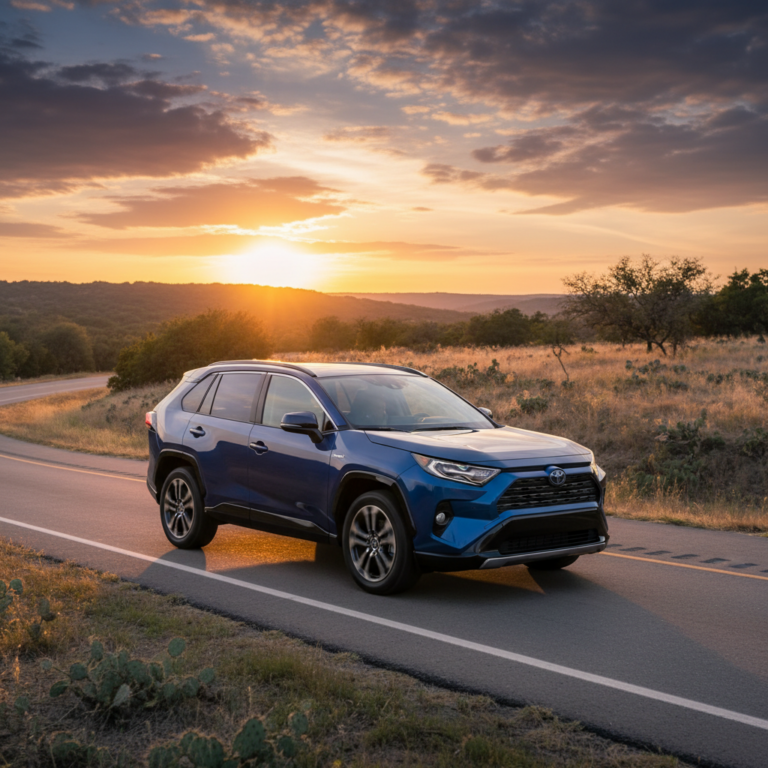
4. 2025 Toyota RAV4 Hybrid – 41 MPG Combined
The RAV4 Hybrid might be the most proven hybrid SUV on the road. At 41 MPG combined, it pairs Toyota’s legendary reliability with genuinely useful efficiency. I’ve seen these roll through 200,000 miles with nothing but basic maintenance.
There’s a reason it consistently tops sales charts. It just works, year after year.
5. 2025 Honda CR-V Hybrid – 40 MPG Combined
Honda’s CR-V Hybrid answers with 40 MPG combined and one of the most practical interiors in this class. The cargo space flexibility makes it a standout for buyers who actually use their SUV for hauling stuff.
Between the RAV4 and CR-V, you really can’t go wrong. Both represent the best of Japanese reliability in hybrid form.
Best Plug-In Hybrid SUVs (PHEVs) for Maximum Efficiency
If you have home charging capability, plug-in hybrids take efficiency to another level. These vehicles can handle daily commutes on pure electric power, then switch to gasoline for longer trips.
Understanding PHEV vs Regular Hybrid
Standard hybrids charge their batteries through driving – you never plug them in. PHEVs have larger batteries that you charge from an outlet. The difference matters for your driving pattern.
PHEVs shine when your daily driving falls within their electric-only range (typically 30-50 miles). Exceed that, and they function like regular hybrids. For Texas commuters with garage charging, it’s a compelling option.
1. 2025 Kia Niro Plug-In Hybrid – 108 MPGe
The PHEV version of the Niro achieves 108 MPGe on electric power with about 33 miles of all-electric range. For urban commuters who can charge daily, you might not visit a gas station for weeks.
2. 2025 Ford Escape Plug-In Hybrid – 101 MPGe
Ford’s Escape PHEV delivers 101 MPGe and approximately 37 miles of electric range. It’s slightly larger than the Niro and offers more American-style interior ergonomics that some buyers prefer.
Most Efficient Non-Hybrid SUVs for 2025
Not everyone wants hybrid complexity. If you prefer traditional powertrains, here are your best options – though you’ll notice a significant efficiency gap compared to hybrids.
1. 2025 Nissan Rogue – 33 MPG Combined
The Nissan Rogue tops the non-hybrid efficiency charts at 33 MPG combined. Its turbocharged three-cylinder engine prioritizes fuel economy over power, which works fine for most driving situations.
2. 2025 Nissan Kicks – 33 MPG Combined
The subcompact Kicks matches the Rogue’s efficiency in a smaller, more affordable package. If you don’t need much cargo space, it’s an efficient urban runabout.
3. 2025 Hyundai Kona – 31 MPG Combined
Hyundai’s Kona delivers 31 MPG combined with a peppy character that makes it genuinely fun to drive. The standard warranty is a nice bonus for peace of mind.
How Hybrid Technology Works in SUVs
Understanding the technology helps you appreciate why hybrids deliver such impressive numbers. It’s not magic – it’s clever engineering that captures energy you’d otherwise waste.
Regenerative Braking Explained
Every time you brake in a conventional vehicle, kinetic energy converts to heat and disappears into the atmosphere. Hybrids recapture that energy. According to the Wikipedia article on regenerative braking technology, these systems can recover up to 70% of the energy that would otherwise be lost.
This is why hybrids excel in city driving. More braking means more energy recovery. Highway cruising doesn’t benefit as much since you’re not decelerating frequently.
Electric Motor Assist During Acceleration
The electric motor assists the gas engine during acceleration, when engines are least efficient. Once you’re up to speed, the gas engine takes over for sustained highway driving. It’s a elegant handoff that maximizes each power source’s strengths.
Battery Performance in Texas Heat
I hear concerns about hybrid batteries in Texas heat constantly. Here’s the reality: modern hybrid batteries are engineered for extreme temperatures. Toyota and Honda have refined their thermal management systems over two decades.
Will extreme heat slightly impact battery longevity? Possibly. Will you notice a meaningful difference in real-world ownership? Probably not. Hybrid batteries routinely outlast the vehicles they’re installed in.
Fuel Efficiency vs Other Factors: What Texas Buyers Should Consider
MPG isn’t everything. Let me walk you through the trade-offs that matter for Texas driving conditions.
Balancing MPG with Towing Capacity
If you tow a boat or trailer, most fuel-efficient SUVs won’t cut it. The hybrids on this list typically max out around 1,500-2,500 pounds towing capacity. Need more? You’ll sacrifice some fuel economy for capability.
AWD Impact on Fuel Economy
Adding AWD typically costs 2-4 MPG in fuel economy. For most Texas drivers, FWD handles our conditions just fine – we don’t see enough snow or ice to justify the efficiency hit.
If you’re curious about drivetrain options, my article on the difference between AWD and 4WD explains when each system makes sense.
Interior Space and Passenger Comfort
Hybrid battery packs take up space. You’ll notice slightly reduced cargo capacity in most hybrids compared to their conventional siblings. The difference is often modest – maybe 2-3 cubic feet – but worth checking if you regularly haul bulky items.
Long-Term Reliability and Resale Value
Toyota and Honda hybrids have exceptional track records. The RAV4 Hybrid and CR-V Hybrid regularly exceed 200,000 miles with minimal issues. That reliability translates to strong resale value – you’ll recoup more when it’s time to sell or trade.
The EPA fuel economy standards also influence manufacturer warranties and support, with most hybrid powertrains covered for 8-10 years.
Real-World Fuel Economy: EPA vs Texas Driving Conditions
EPA numbers come from controlled laboratory testing. Texas conditions differ – sometimes in your favor, sometimes against.
Working for you: Our highway-heavy driving patterns often beat EPA estimates. Long, flat stretches at steady speeds let hybrids operate in their efficiency sweet spot.
Working against you: Running AC in August absolutely impacts efficiency. Aggressive acceleration from a standing stop (common in traffic) burns more fuel than gentle departures.
Tire pressure matters more than most people realize. Properly inflated tires can improve your actual MPG by 2-3%. In Texas heat, check them monthly since high temperatures affect pressure readings.
Calculating Your Fuel Savings: Is a Hybrid SUV Worth It?
The hybrid premium typically runs $2,500-$4,000 over conventional versions. Is it worth it? Let’s calculate.
Annual Fuel Cost Comparison
- 30 MPG conventional: $1,205 annual fuel cost
- 45 MPG hybrid: $805 annual fuel cost
- Annual savings: $400
Break-Even Point on Hybrid Premium
With $400 annual savings, a $3,000 hybrid premium breaks even in roughly 7.5 years. Drive more miles, and payback comes faster. Factor in typically stronger resale values for hybrids, and the financial case becomes compelling.
If you’re working with a tighter budget, consider shopping for quality used vehicles under $20,000 – including used hybrids that have already depreciated past the premium.
Texas Gas Price Trends
Gas prices fluctuate, but the math shifts further in hybrids’ favor when prices rise. At $3.50 per gallon, that annual savings jumps to nearly $600. Hybrids essentially hedge against fuel price volatility.
Final Recommendations: Which Fuel Efficient SUV Is Right for You?
After examining all the data, here are my picks for different buyer priorities:
Best Overall Value: Kia Niro Hybrid
At 53 MPG and a $26,990 starting price, nothing matches the Niro’s efficiency-to-dollar ratio. Accept the compact dimensions, and you’ll enjoy the lowest operating costs in this category.
Best for Families: Honda CR-V Hybrid
The CR-V Hybrid balances 40 MPG efficiency with genuine utility. The flexible cargo area and proven Honda reliability make it ideal for family use.
Best Budget Non-Hybrid: Nissan Rogue
If hybrid complexity concerns you, the Rogue delivers respectable 33 MPG in a spacious, comfortable package. You’ll pay more for fuel, but appreciate the simpler powertrain.
Best Luxury: Lexus UX 300h
For buyers who value refinement alongside efficiency, the Lexus UX 300h wraps 43 MPG in premium materials. Long highway stints feel less fatiguing in a quiet, well-appointed cabin.
Whatever you choose, know the market pricing before visiting dealerships. My guide on how to negotiate the best price at Texas dealerships gives you the framework to get a fair deal.
The best fuel efficient SUVs in 2025 deliver real savings without meaningful sacrifice. Pick the one that fits your needs, negotiate from knowledge, and enjoy putting that fuel savings toward something more rewarding than the gas pump.