Why Vehicle History Reports Matter for Texas Buyers
Let me tell you something that’ll save you thousands. According to used car market statistics, about 71% of used car buyers now pull a vehicle history report before purchase. That’s up from just a few years ago. And there’s a good reason – the average used car now costs over $31,000. That’s not pocket change.
I’ve watched buyers walk into dealerships ready to sign, only to discover the “cream puff” they found has a salvage title hiding in its past. The sting of that moment never gets easier to watch.
The True Cost of Skipping a Vehicle History Check
Here’s the math that keeps me up at night. A vehicle history report costs between $30-45. Buying a flood-damaged car without knowing? That can cost you the entire vehicle. Insurance companies often won’t cover claims on title-branded vehicles. Banks won’t finance them. And resale value? Forget about it.
When you’re shopping for quality used vehicles under $20,000, that $30 report isn’t an expense. It’s insurance against financial disaster.
Texas-Specific Risks: Flood Damage and Title Washing
Texas has a problem most buyers don’t know about. According to National Insurance Crime Bureau statistics, Hurricane Harvey alone damaged over 422,000 vehicles. Many of those cars ended up back on dealer lots across the country.
Houston still has an estimated 29,200 flood-damaged vehicles driving around. Texas leads all 50 states in flood-damaged cars on the road. That’s the reality we’re dealing with here.
CarFax vs AutoCheck: Which Report Should You Get?
Both services have their strengths. Neither is perfect. Here’s what I tell buyers who ask me which one to pull.
CarFax Strengths and Pricing
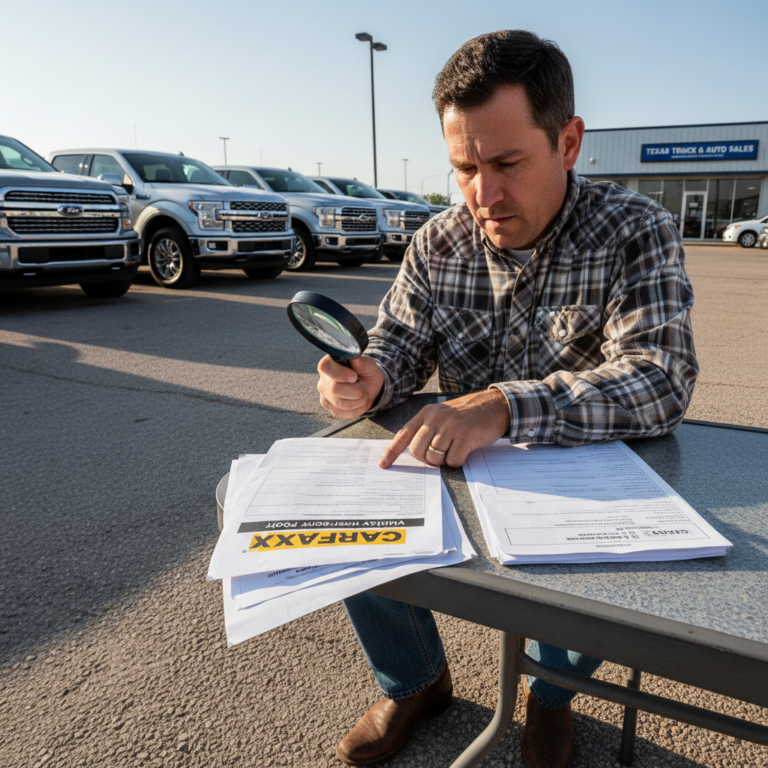
CarFax runs $45 per report. More expensive, yes. But their service records are typically more detailed. When a vehicle has an accident history, CarFax often provides diagrams showing exactly where the damage occurred.
If you’re buying a vehicle with significant service history at dealerships, CarFax usually captures that information better.
AutoCheck Advantages and Scoring System
AutoCheck costs $30 per report and does something CarFax doesn’t. They provide a 100-point score comparing your vehicle to similar models of the same age. That gives you context about whether the vehicle’s history is better or worse than average.
AutoCheck also pulls stronger auction data. If you’re looking at a car that’s been through dealer auctions, AutoCheck often has more information on that chain of custody.
When to Get Both Reports
On expensive vehicles or anything that feels slightly off, I recommend pulling both reports. They use different data sources and sometimes catch different things. A clean CarFax doesn’t mean AutoCheck will be clean too.
- NMVTIS: Basic title information and brand history
- VINCheck (NICB): Checks if vehicle was reported stolen or salvaged
- Dealer Reports: Many dealers will show you a free report if you ask
Critical Sections to Review in Every Report
Don’t just skim the summary. Every section tells part of the story. Here’s where to focus your attention.
Title History and Status
This is the first thing I check. Look for the current title status and any brands attached. Clean title is what you want. Anything else – salvage, rebuilt, flood, fire, lemon – deserves serious scrutiny.
Verify the VIN on the report matches the actual vehicle. Check the VIN plate on the dashboard and door jamb. They should be identical.
Accident and Damage Records
Not all accidents are equal. A minor fender bender is different from structural damage. The report should indicate severity when information is available.
Look for airbag deployments – that indicates a serious collision. Frame damage is particularly concerning because it affects alignment and safety permanently, even after repairs.
If you’re curious about other types of damage that affect Texas vehicles, check out our guide on understanding hail damage costs. It’s more common than you’d think around here.
Odometer Readings Over Time
The report shows odometer readings at various service points. These should consistently increase over time. Any sudden drops or suspicious gaps might indicate odometer tampering.
The NHTSA flood-damaged vehicle safety information notes that flood cars sometimes have their odometers reset during “repairs” – another reason to watch those numbers carefully.
Ownership History
How many people have owned this vehicle? Long-term single owners generally indicate a vehicle that was cared for. Multiple owners in a short timeframe can signal problems.
Pay attention to the type of owners too. Personal use is different from fleet or rental use. Neither is automatically bad, but rental and fleet vehicles typically accumulate harder miles.
Service and Maintenance Records
Consistent service records suggest an owner who maintained the vehicle properly. Gaps in service history aren’t always bad – they might just mean the owner used independent shops that don’t report to these databases.
But if a vehicle shows regular service and then nothing for three years, ask why.
Red Flags You Cannot Ignore
Some findings should stop you cold. Others are negotiating opportunities. Here’s how to tell the difference.
Salvage and Rebuilt Titles Explained
A salvage title means an insurance company declared the vehicle a total loss – typically because damage exceeded 75% of the vehicle’s value. These vehicles cannot be legally driven until repaired and reinspected.
A rebuilt title means a salvage vehicle was repaired and passed state inspection. It’s now legal to drive. But here’s the thing: you don’t know the quality of those repairs. I’ve seen rebuilt titles where the work was done right. I’ve seen others that were death traps.
Flood Damage Indicators in Reports
Flood damage is particularly dangerous because water destroys electrical systems, causes hidden corrosion, and promotes mold growth. Even excellent repairs can’t fully address these issues.
Texas law requires “Flood Damage” notation on titles for water-damaged vehicles. But title washing – moving vehicles through states with looser requirements – can remove these brands. The Texas Attorney General flood damage alert warns specifically about this practice.
Frame Damage and Structural Issues
Frame damage affects the vehicle’s structural integrity. Even professional repairs don’t fully restore original safety standards. Alignment problems often persist. In a subsequent accident, the vehicle may not protect you as designed.
Airbag Deployment History
If airbags deployed, the vehicle was in a serious collision. Replacement airbags are expensive – anywhere from $1,000 to $6,000 depending on the vehicle. Some sellers skip this expense and leave the warning light disabled.
Title Washing Warning Signs
Watch for vehicles that moved through multiple states in short timeframes. Title washing is a federal crime, but it still happens. Common routes run through states like Pennsylvania, New Jersey, or Oregon, which have different title branding requirements.
How to Spot What’s NOT in the Report
Here’s something most guides won’t tell you. Vehicle history reports have significant limitations.
Understanding Report Limitations
These reports only show reported damage. If someone backed into a post at Walmart and paid cash for the repair, it won’t appear. Private party accidents without insurance claims are invisible to these databases.
Unreported Damage and Private Repairs
A clean vehicle history report doesn’t guarantee an undamaged vehicle. It just means nothing was reported. Always assume you need additional verification.
The Importance of Professional Inspection
Before any purchase, get a pre-purchase inspection from a trusted mechanic. They can spot physical signs of flood damage, accident repair, and mechanical issues that reports miss.
Physical flood indicators include musty smells, water stains on upholstery, rust in unusual places, moisture in headlights, and sand or mud under carpets. The Texas DMV flood damage buyer guide provides a detailed checklist.
Review your vehicle history report before scheduling how to properly test drive a used vehicle. No point wasting time on something the paperwork already disqualifies.
Using Vehicle History Reports to Negotiate
Report findings are leverage. Use them wisely.
How to Leverage Report Findings
Minor accidents disclosed in the report justify asking for a lower price. The vehicle’s value is diminished – that’s a fact. Request repair receipts for any damage shown. If the seller can’t provide documentation of quality repairs, that’s additional negotiating leverage.
Inconsistent service records can also work in your favor. Gaps suggest potential deferred maintenance, which could mean upcoming repair costs for you.
For more detailed strategies, check out our guide on negotiating strategies for Texas dealerships.
Questions to Ask Sellers Based on Report Data
- “The report shows an accident in 2021. Can you tell me what happened and provide repair receipts?”
- “I see the vehicle changed owners three times in two years. Do you know why?”
- “There’s a gap in service records from 2019-2022. Was the vehicle in storage or did maintenance happen elsewhere?”
- “The report shows this was a fleet vehicle. What company owned it and how was it used?”
If sellers can’t or won’t answer these questions, consider walking away.
Texas-Specific Vehicle History Considerations
Buying in Texas comes with unique challenges. Here’s what Lone Star buyers need to know.
Flood Damage Disclosure Laws in Texas
Texas law requires vehicles with flood damage to carry that notation on the title permanently. Sellers must disclose flood history. But enforcement depends on the damage being properly documented in the first place.
Common Scams Targeting Texas Buyers
After every major hurricane, cleaned-up flood cars hit the market. Scammers dry them out, detail the interiors, and sell them quickly before problems appear. Coastal-area vehicles deserve extra scrutiny, especially in the months following major storms.
How to Verify Texas Title Brands
If you’re suspicious about a title’s authenticity, you can verify through the Texas DMV. Contact them directly with the VIN for official title history. It’s an extra step, but worth it for expensive purchases.
If you’re specifically shopping for trucks, our complete used truck buying guide covers additional Texas-specific considerations.
Your Vehicle History Report Checklist
Before you buy any used vehicle in Texas, work through this checklist:
- Pull the report – Get CarFax, AutoCheck, or both for expensive purchases
- Verify the VIN – Match the report VIN to the dashboard and door jamb
- Check title status – Clean is best; any brands require explanation
- Review accident history – Note severity, look for frame damage and airbag deployment
- Examine odometer readings – Should increase consistently over time
- Count previous owners – Multiple short-term owners can signal problems
- Look for flood/fire history – Walk away from these regardless of price
- Check registration location – Be cautious with coastal-area vehicles
- Schedule inspection – Have a mechanic verify what reports can’t show
- Use findings to negotiate – Any issues justify asking for a better price
A vehicle history report is one of your best tools as a buyer. It won’t catch everything, but it catches enough to save you from the worst mistakes. For $30-45, there’s no reason to skip it.
Take your time, do your homework, and trust your gut. If something feels off about a deal, it probably is.